What does a retaining wall cost in the Perth Hills in 2026?
Updated October 2026
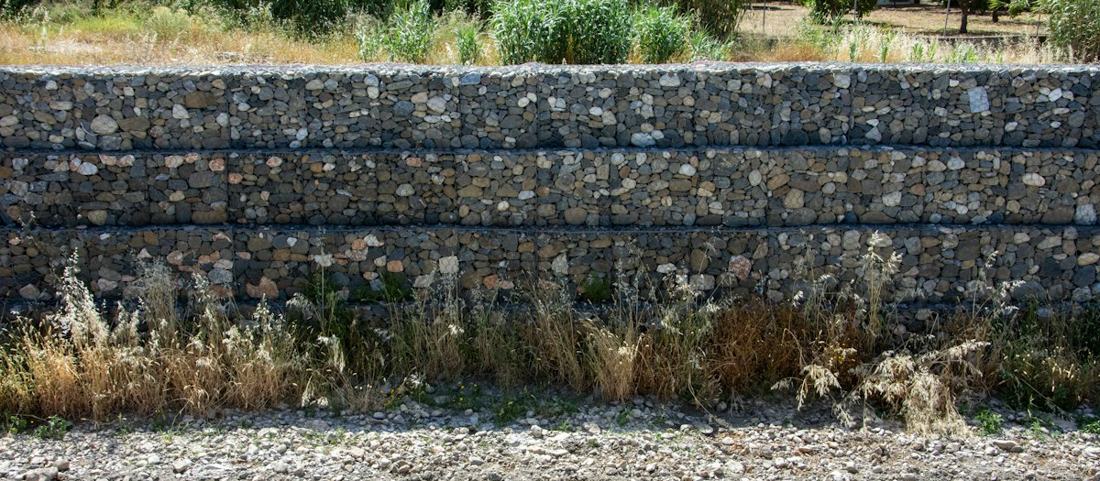
Retaining wall cost is mostly a function of five things: material, height, access, drainage and ground. In the Perth Hills the fifth one is the one that surprises people, because the ground here is not what Perth cost guides assume. This page gives hedged 2026 ranges so you can sanity-check a quote, not replace it. The only number that matters for your block is a free on-site quote.
Guide ranges by material
The ranges below are per lineal metre for a wall about one metre high, which is roughly per square metre of wall face, including standard footings. They are drawn from published Australian cost guides.
Timber sleepers: roughly $200 to $450 per metre. Treated pine at the lower end, hardwood higher. The cheapest way to retain a garden, with a 15 to 25 year life when drained properly. See timber retaining walls.
Concrete sleepers: roughly $250 to $600 per metre. Galvanised steel posts and reinforced concrete sleepers, nothing that rots, decades of life. The modern default for structural walls. See concrete sleeper walls.
Block and reinforced masonry: roughly $300 to $750 per metre. Interlocking garden systems at the lower end, core-filled reinforced block at the top, and some guides price engineered masonry above that per square metre of face. See block retaining walls.
Limestone: roughly $350 to $700 per metre. Reconstituted limestone block at the lower and middle of the range, natural quarried stone higher, and some Perth cost guides put reconstituted limestone block at $480 to $780 per square metre of wall face. See limestone retaining walls.
Published guides vary, prices move, and almost none of them are written for hills ground. Treat all of the above as a starting band.
Why a Hills quote can read above the Perth average
This is the honest answer to the question everybody asks, and it is the thing to look for when you compare quotes.
The ground is rock, not sand. Perth is a sand city and the Hills is not. The Darling Plateau here is lateritic duricrust and pea gravel over weathered granite, and the City of Kalamunda records in its Local Planning Strategy that sewerage is constrained in the Hills because hard granite sits close to the surface and is costly to dig through. The same granite is what a post hole has to get through. Rock drilling or coring takes longer, needs different gear, and is the single most common reason a Hills quote beats a plains quote for the same wall.
Access. A machine that can reach the wall line is cheap. A steep block where the machine cannot get in, or where materials have to be carried or craned, is not. On large Hills lots the problem is sometimes the opposite and access is easy, which is worth knowing before you assume the worst.
Drainage, and water that has nowhere to go. The Shire of Mundaring names heavy soils and perched water tables as Hills constraints. Water that cannot soak away loads a wall instead. Proper drainage is not an optional line item here.
Height. The biggest lever, everywhere. Soil pressure grows faster than height does, so a 1.5m wall costs well over fifty percent more than a 1m wall, because it needs deeper footings, heavier posts and usually an engineer.
Demolition and disposal. Removing a failed wall and getting old treated pine off a hills block adds real cost.
Approvals and engineering, and what they add
In WA a retaining wall is exempt from needing a building permit only where it retains no more than 500mm of ground, is not tied to other building work or to holding up the land next door, and is not work of a kind that affects adjoining land. The measurement is the ground the wall retains, not the height of the wall. All three conditions have to be met, so a wall on or near a boundary needs a permit whatever its height. Development approval under the local planning scheme can be a separate question again.
Walls carrying a surcharge, a driveway, a pool or a building above them, generally need engineering whatever their height. Several WA councils ask for a structural engineer's design on any wall that needs a permit. That is applied through the permit application rather than being one statewide rule, so your permit authority is the one to ask: the Shire of Mundaring, the City of Kalamunda, the City of Swan or the City of Armadale, depending on where you are. A permit, an engineer's design and certification all add real cost, so find out what your wall triggers before you compare quotes. Before any digging, your builder should lodge a free Before You Dig Australia (BYDA) enquiry so underground services are located.
The drainage question that makes quotes comparable
When you hold two quotes side by side, check whether each one itemises drainage: ag-pipe behind the base, free draining gravel backfill with geotextile fabric, and a legal discharge point for the water. Water, not weight, is what fails retaining walls, and a quote that quietly leaves drainage out is a cheaper wall that fails sooner. If drainage is not listed, ask. Our retaining wall drainage page explains why it matters more here than on the plain.
Three more checks. Ask how post holes are priced if rock is hit, because that is the Hills variable and a builder who has not thought about it has not priced your block. Ask whether the quote assumes a building permit, and who is lodging it. And make sure both quotes are for the same engineered height and finish, since a 900mm quote against a 1.2m quote is not a comparison.
Get a real number
Perth Hills Retaining Walls is a referral service. Tell us about your wall through the form and an experienced, insured local builder who works your suburb will call you back with a free quote, no obligation.
Frequently asked questions
What height retaining wall needs a building permit in WA?
A retaining wall is exempt from needing a building permit only where it retains no more than 500mm of ground, is not associated with other building work or with protecting the land next door, and is not work of a kind affecting adjoining land. The figure is the ground retained, not the wall height. All three conditions must be met, so a boundary wall needs a permit at any height. Development approval can be a separate question, and the rules change, so check your wall with your local government before you build.
Who is allowed to build a retaining wall in WA?
That turns on how the work is classified under the building legislation, which is a statutory question and not one to settle from a dollar figure on a website. The thresholds you will find quoted around the internet are written for other kinds of building work, and several council checklists still print wording that predates the current regulations. The reliable approach is to ask the builder what registration or licence they hold, check it with Building and Energy, and ask your permit authority what your particular wall requires.
Am I covered by home indemnity insurance?
Home indemnity insurance is compulsory in WA for residential building work valued over $20,000, but it does not cover everything. Standalone jobs that are not part of building or renovating the house itself, a pergola, a fence or a pool, are treated as associated work and are not covered. Ask your builder in writing whether your job attracts it before you pay a deposit, because the answer turns on how the work is classified, not just on what it costs.
Why do quotes for the same wall vary so much?
Usually because they are not the same wall. Differences in drainage inclusions, engineering, footing depth, how rock is priced, demolition, disposal and finish all hide inside the totals. Ask each builder to itemise, especially the drainage and the rock allowance.
What is the cheapest retaining wall option?
Treated pine timber is usually the cheapest to build, and interlocking block is often the cheapest long-life option at garden height. Cheapest over twenty years is a different question, where concrete sleepers often win because they never need replacing.